Wednesday, April 21, 2010

Second Panel Discussion and a Dinner at Reciclo


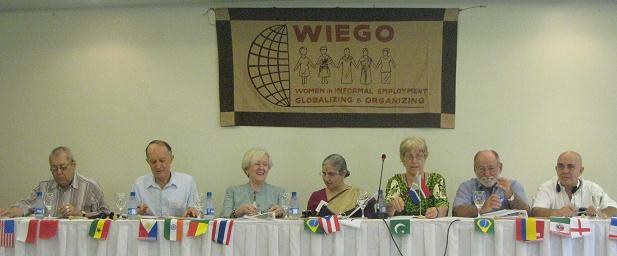
The second panel discussion on April 20th was moderated by Dan Gallin with panelists Marcelina Bautista, Myrtle Witbooi and Ip Pui Yu (International Domestic Workers Network), Rosalinda Ofreneo (HomeNet Southeast Asia) and Sapna Joshi (HomeNet South Asia). Click on the link below to hear Sapna Joshi share issues surrounding Home-based workers and statistics.

El segundo debate fue moderado por Dan Gallin junto con las panelistas Marcelina Bautista, Myrtle Witbooi e Ip Pui Yu (de la Red Internacional de Trabajadores Domésticos), Rosalinda Ofreneo (de HomeNet del Sudeste de Asia) y Sapna Joshi (de HomeNet del Sur de Asia). Ver video clips a continuación.

http://www.youtube.com/watch?v=ExiwYljYRzU


Also during the panel, Myrtle Witbooi and Marcelina Bautista of International Domestic Workers Network discussed recent and upcoming highlights for domestic workers.

http://www.youtube.com/watch?v=WVTdoVnzm3U


Tuesday evening featured a trip to ASMARE's Riciclo restaurant were participants were treated to live music, dancing and wonderful meals.


Panel Discussion with StreetNet and Global Alliance of Waste Pickers

After viewing exhibition stands and briefings by the Nets, participants were invited to panel discussions. The first panel discussion held in the morning was moderated by Chris Bonner with panelists Pat Horn (StreetNet International), Mariny Vazquez (Latin American Network of Waste Pickers), Neha Kagal (KKPKP) and Kavita Pawar (KKPKP).

Panelists were asked to comment on activities their nets have been involved in, the challenges that their global networks face and how their association with WIEGO has impacted their organisations.

Chris Bonner summed up the comments from the panelists well:

  • Organizing is never easy for formal or informal workers but there are additional difficulties for informal workers.
  • Informal workers have proved that they are capable of organising.
  • Organisers are focusing attention on how to have "internal democracy" and communication.
  • Once networks are organised, it is difficult to remain organised.
  • There are strong forces against organising - eg. lobbying groups.
  • Organisations must use legal strategies to benefit from the law.
  • Organisations were positive about their association with WIEGO.

Debate con StreetNet y la Alianza Mundial de Recicladores
Luego de ver los stands de exposición y resúmenes informativos por parte de las Redes, se invitó a los participantes al debate. El primero, que tuvo lugar en la mañana, fue moderado por Chris Bonner junto con las panelistas Pat Horn (de StreetNet International), Mariny Vazquez (de la Red Latinoamericana de Recicladores), Neha Kagal (de KKPKP) y Kavita Pawar (de KKPKP). Se solicitó a los panelistas que comenten las actividades en las que participaron sus redes, los desafíos que enfrentan sus redes globales y cómo la asociación de cada una de ellas con WIEGO ha impactado en sus organizaciones. Chis Bonner realizó un resumen de los comentarios de los panelistas:

- Organizar no es fácil ya sea para los trabajadores formales o informales, pero existen dificultades adicionales para los trabajadores informales.
- Los trabajadores informales han demostrado que son capaces de organizarse.
- Los organizadores centran la atención en cómo llegar a la “democracia interna” y la comunicación.
-Una vez que se organizaron las redes, es difícil que se mantengan organizadas.
-Existen importantes fuerzas en contra de la organización – por ejemplo: los grupos de presión.
-Las organizaciones deben utilizar estrategias legales para obtener beneficios de la ley.
-Las organizaciones tuvieron un punto de vista positivo con respecto a su asociación con WIEGO.

Photos from Exhibition Booths of HomeNets and Domestic Workers / la Exposición y de la Presentación por parte de HomeNets ylas Trabajadoras Domésticas

Exhibition booths by the HomeNets and Domestic Workers were available for viewing after lunch on Day 1. Each group also gave a presentation reviewing the work they do and the challenges they face.

Los stands de exposición de las HomeNets y de las Trabajadoras Domésticas se exhibieron luego del almuerzo del primer día. Cada grupo además brindó una presentación con respecto al trabajo que realiza y los desafíos que enfrenta.


Photos from the Exhibition and Presentation by Domestic Workers.
Fotos de la Exposición y de la Presentación por parte de las Trabajadoras Domésticas.


Exhibitions and Briefings by HomeNet Southeast Asia and South Asia.
Exposiciones y Resúmenes Informativos por parte de HomeNet del Sudeste de Asia y del Sur de Asia.


Exhibition Booths for StreetNet and Global Alliance of Waste Pickers / Exposición de StreetNet y la Alianza Mundial de Recicladores

The morning of Day 1 included the opportunity for assembly participants to visit exhibition booths by StreetNet International and the Global Alliance of Waste Pickers. The photos can be found below. These exhibitions and briefings were followed by a panel discussion with the two organisations.

Exposición de StreetNet y la Alianza Mundial de Recicladores.
Durante la mañana del primer día, fue posible reunir a los participantes para que visiten los stands de exhibición de StreetNet International y de la Alianza Mundial de Recicladores. A continuación pueden verse las fotos. Luego de estas exposiciones y resúmenes informativos se realizaron debates con las dos organizaciones.


Exhibition and briefing from the Global Alliance of Waste Pickers.
Exposición y resumen informativo de la Alianza Mundial de Recicladores.


Exhibition and discussion by StreetNet and Affliliate NASVI. Exposición y debate de StreetNet y las Afiliadas NASVI.


Tuesday, April 20, 2010

Official Opening of the 5th WIEGO General Assembly / Apertura Oficial de la 5ta Asamblea General

Renana Jhabvala began the first morning of official meetings by welcoming participants to the 5th WIEGO General Assembly. She began by calling out all the countries participating in the General Assembly and commenting on our partners who could not attend due to delays in air traffic from Europe. Countries represented in the meetings include: Argentina, Brazil, Canada, India, Colombia, Ghana, Indonesia, China/Hong Kong, Nepal, Pakistan, Peru, Philipines, South Africa, Switzerland, and the USA. Many participants from the UK, Malaysia, Thailand and Ghana could not make it to the event.

Renana continued by stating that all participants were here had the same focus "women workers in the informal economy" and while we have come from different backgrounds - informal workers, organisers, researchers and policymakers; we are here at General Assembly because of our interest and commitment to women in the informal economy. Renana also discussed the importance of coming together as a network.

Martha Chen then continued by mentioning that sadly 22 members that planned to attend could not make the assembly due to flight restriction. Marty then reviewed the dates, locations and public events associated with past General Assemblies. She pointed out that this meeting was the first general assembly in Latin America and the first with WIEGO registered as a non-profit in the UK. Marty shared that it was particularly unfortunate that staff from the WIEGO office - Dave Spooner, Lucy Hopley, Justina Pena-Pan and Joe Holly - could not make it to the general assembly.

Marty outlined the importance of meeting for a general assembly to consolidate and validate the WIEGO network, share information and carry out governance functions. Marty also underscored the need to review proposed work plans and articles of association provided to participants. She also mentioned that board treasurer, Debra Davis along with board members Jacques Charmes and Kofi Asamoah were also unable to attend due to travel restrictions.

Apertura Oficial de la 5ta Asamblea General de WIEGO

Renana Jabvala dio comienzo a la primera mañana de las reuniones oficiales ofreciendo una bienvenida a los participantes en la 5ta Asamblea General de WIEGO. Comenzó convocando a todos los países que participan de la Asamblea General y comentando las noticias de los compañeros que no pudieron asistir debido a las demoras en el tráfico aéreo desde Europa. Los países representados que están incluidos en la reunión son los siguientes: Argentina, Brasil, Canadá, India, Colombia, Ghana, Indonesia, China/Hong Kong, Nepal, Pakistán, Perú, Filipinas, Sudáfrica, Suiza y los Estados Unidos. Muchos de los participantes del Reino Unido, Malasia, Tailandia y Ghana no pudieron llegar debido a dicho motivo.

Renana continuó planteando que todos los participantes presentes tenían el mismo enfoque “mujeres trabajadoras en la economía informal” y aunque procedemos de distintos orígenes –trabajadores informales, organizadores, investigadores y políticos, estamos aquí en la Asamblea General debido nuestro interés y compromiso con las mujeres en la economía informal. Además Renana debatió sobre la importancia de unirse como red.

Luego, Martha Chen continuó mencionando que desafortunadamente 22 de los miembros que planeaban asistir a la Asamblea no pudieron hacerlo debido a la restricción de los vuelos. Luego, Marty realizó una revisión de las fechas, lugares y eventos públicos asociados con las Asambleas Generales anteriores. Señaló que esta reunión era la primera Asamblea General en Latinoamérica y la primera con WIEGO registrado ya como una organización sin fines de lucro en el Reino Unido.

Marty expresó que era particularmente desafortunado que parte del personal de la oficina de WIEGO – Dave Spooner, Lucy Hopley, Justina Pena-Pan y Joe Holly – no pudiera asistir a la Asamblea General. Marty resaltó la importancia de conformar una Asamblea General para consolidar y validar la red WIEGO, compartir información y llevar a cabo las funciones del gobierno. Además, Marty destacó la necesidad de rever los planes de trabajo propuestos y los estatutos de la asociación ofrecidos a los participantes. También, mencionó que la tesorera del Cuerpo Directivo, Debra Davis, junto con los Miembros Directivos Jacques Charmes y Kofi Asamoah, tampoco pudieron asistir debido a las restricciones de los vuelos.

Field Visits - ASMARE / Visitas de Campo - ASMARE

On Thursday April 19th, participants were given the opportunity to go on field visits to recycling facilities and a popular shop in Belo Horizonte. One of the visits was to the nearby ASMARE Recycling Warehouse were we were greeted by Dona Geralda and treated to a tour of the facilities. Dona Geralda also gave an overview of the history of ASMARE and waste pickers in Belo Horizonte.

The ASMARE association of waste pickers was launched 20 years ago by 20 "catadores" who believed they could form an organisation. They now have 230 waste pickers in the association with 100 of them working in the warehouse we visited. ASMARE offers a creche for the children of workers and also offers a workshop for children and teens for which they are provided compensation as long as they remain in school.

ASMARE recycles 450 - 500 tonnes of paper per month and they have an agreement with the city whereby municiple trucks deliver waste to the warehouse and paper is separated and recycled.

Dona Geralda mentioned that originally waste pickers were treated badly and not well seen by society. Waste pickers themselves didn't have much self esteem anddidn't consider themselves workers and didn't understand how important their work was to the health of the environment.

Now workers are seen as environmental workers and as the importance of recycling increases, the public perceives waste pickers as valuable contributing members of society. Waste pickers themselves understand their important contribution to society and the environment.

Dona Geralda also told us about her own personal story as a waste picker and mother of 12 children (9 surviving). She proudly explained how her work allowed her to provide for all her children and that because of her work she was invited to speak at the UN offices in New York. She smiled as she recounted how that 5 minutes speaking at the UN made her famous in Belo Horizonte and with her children's friends. Her children were no longer seen as the children of a maginalized waste picker but now as the children of a celebrity.


Visitas de Campo - ASMARE
El jueves 19 de abril, los participantes tuvieron la oportunidad de ir a visitas de campo a las instalaciones de reciclaje y a un Shopping popular muy conocido en Belo Horizonte. Una de las visitas fue al cercano Depósito de Reciclaje ASMARE donde conocimos a la Sra. Geralda quien nos guió en una visita por las instalaciones. Además, la Sra. Geralda nos brindó una reseña general de la historia de ASMARE y de los recicladores en Belo Horizonte.

La asociación de recicladores ASMARE fue fundada hace 20 años por 20 “recolectores/catadores” que creyeron que podían formar una organización. En la actualidad, tienen 230 recicladores en la asociación de los cuales 100 trabajan en el depósito que visitamos. ASMARE ofrece una guardería para los hijos de los trabajadores y también un taller para niños y adolescentes por los cuales reciben una compensación mientras que estos permanezcan en la escuela.

ASMARE recicla entre 450 y 500 toneladas de papel por mes y tiene un acuerdo con la ciudad a través del cual los camiones municipales entregan residuos a los depósitos y el papel se separa y se recicla.

La Sra. Geralda mencionó que originariamente se trataba mal a los recicladores y no eran bien vistos por la sociedad. Los recicladores tenían su autoestima muy baja y no se consideraban trabajadores ni llegaban a comprender cuán importante era su trabajo para la salud del medio ambiente.

Ahora los recicladores son vistos como trabajadores ambientales y a medida que aumenta la importancia del reciclaje, el público toma a los recicladores como miembros activos muy valiosos que contribuyen con la sociedad. Los mismos recicladores entienden la importancia de su contribución con la sociedad y el medio ambiente.

La Sra. Geralda además nos contó sobre su propia historia personal como recolectora y madre de 12 niños (de los cuales 9 están con vida). Explicó, con mucho orgullo, cómo su trabajo le permitía dar sustento a todos sus hijos y, que debido a su trabajo la invitaron a hablar en las oficinas de las Naciones Unidas en Nueva York. Se sonreía mientras describía cómo por causa de esos 5 minutos hablando en la ONU se convirtió en famosa en Belo Horizonte y ante los amigos de sus hijos. Sus hijos ya no eran vistos como los hijos marginados de un reciclador sino como los hijos de una celebridad.

Monday, April 19, 2010

Beautiful Belo Horizonte

The 5th WIEGO general meeting begins on April 20th in beautiful Belo Horizonte, Brazil. Belo Horizonte is located in the south-eastern part of Brazil and is the country's third largest City.

This evening's welcome dinner provided a wonderful opportunity for participants to meet one another and catch up with friends. One highlight of the evening was the recognition of several women leaders who have worked tirelessly in organising informal workers. The evening also featured the musical talents of several groups including the catadores/recicladores and a group from South Africa.


Unfortunately several of the participants at the General Assembly have been delayed due to travel restrictions surrounding the volcanic eruption near Eyjafjallajokull, Iceland.

This blog will be one way of keeping members involved in the General Assembly even if they are delayed or unable to attend the event. We hope to feature photographs, video and descriptions of events on the blog.


Hermoso Belo Horizonte
La 5ta Reunión General de WIEGO comienza el 20 de abril en la hermosa ciudad de Belo Horizonte, Brasil. Belo Horizonte está ubicada en la parte sudeste de Brasil y es la tercera ciudad más grande del país. La cena de bienvenida de esta noche brindó a los participantes la maravillosa oportunidad de reunirse y confraternizar con amigos. Uno de los momentos destacables de la noche fue el reconocimiento hecho a varias mujeres líderes que han trabajado incansablemente en la organización de los trabajadores informales. La velada también puso de relieve el talento musical de varios grupos incluyendo a los catadores/ recicladores y un grupo de Sudáfrica.
Desafortunadamente, varios de los participantes de la Asamblea General se han retrasado debido a las restricciones de los vuelos que rodean la erupción volcánica cerca de Eyjafjallajokull, Islandia. Este blog será una forma de mantener a los miembros informados de lo que ocurre en la Asamblea General aunque se retrasen o no puedan asistir al evento. Esperamos exponer fotografías, videos y descripciones del evento en el blog.